



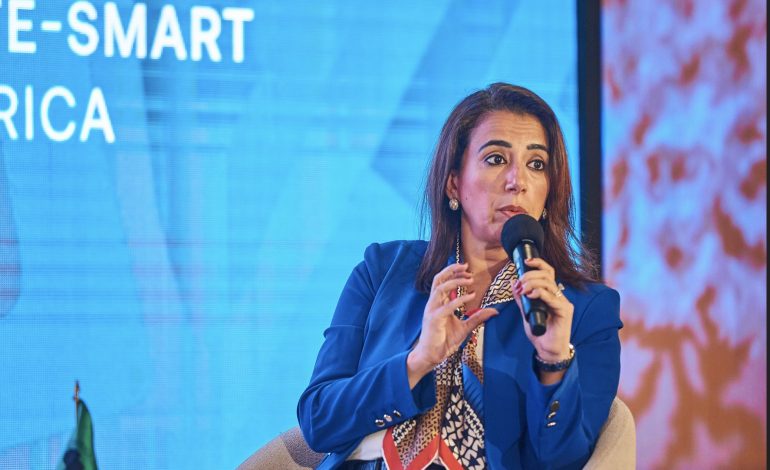
African policymakers and multilateral lenders say capital is not the main barrier to scaling the continent’s digital economy. The bigger problem is getting that money into viable projects.
At a closed-door session in Tangier on April 1, held alongside the UN Economic Commission for Africa’s finance ministers’ meeting, officials pointed to weak project pipelines, high financing costs, and limited coordination across institutions as the main bottlenecks slowing investment in digital infrastructure and innovation.
Africa’s digital sector is expanding, from mobile money to AI-led services. Yet long-term, affordable financing remains scarce. Investors face currency risks, thin risk-sharing tools, and a shortage of early-stage funding. Many projects also fail to reach bankability, limiting their ability to attract capital.
“Africa’s innovation challenge is not a shortage of ideas, but a shortage of long-term, affordable, and well-structured financing. Addressing this will be critical to unlocking productivity, job creation, and structural transformation across the continent.”
That gap between capital supply and actual investment came up repeatedly.
“One of Africa’s key challenges is not a lack of capital, but a shortage of bankable projects and stronger institutional collaboration to scale investment.”
Participants called for more structured deal pipelines and tighter coordination among African financial institutions. Without that, capital pools remain underused.
The discussion also focused on how to fund higher-risk sectors such as early-stage technology. Traditional lending models often fail to price that risk correctly.
“In the technology space, risk is harder to structure. We need more creative financing models and dedicated funds to support early-stage innovation.”
Blended finance, guarantees, and co-financing models were flagged as ways to bridge that gap. These tools can help align investor expectations with the realities of innovation-driven sectors, where returns take longer and risks are less predictable.
Officials also stressed that digital investment cannot be separated from broader infrastructure needs.
“Technology and innovation go beyond digital. We are talking about a broader ecosystem—including infrastructure, energy, and emerging technologies—all of which require significant investment.”
The takeaway was blunt. Africa does not just need more capital. It needs better-prepared projects, clearer risk-sharing structures, and institutions that can work together to deploy funds at scale.