



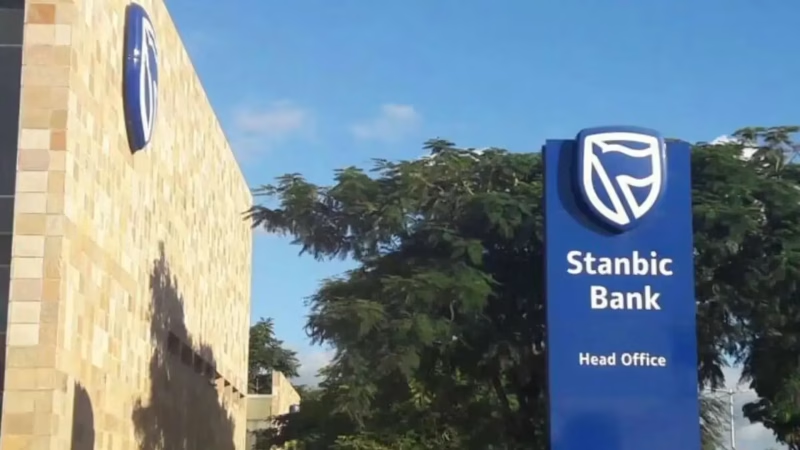
Kenyan banks are entering a tougher earnings phase as falling interest rates and a stabilising currency erase two of the industry’s most profitable tailwinds. Results from Stanbic Holdings, one of Kenya’s tier 1 banking groups, show how the shift is already changing bank income, with balance sheets expanding while two major revenue engines weaken.
The Nairobi-based lender reported net profit of KES 13.7 billion ($105 million) for 2025, unchanged from a year earlier. The flat result came even as the bank grew aggressively. Total assets rose 19% to KES 541.3 billion ($4.16 billion) and loans to customers rose 18.6% to KES 272.9 billion ($2.10 billion) as credit demand began to recover.
Kenya’s central bank cut its benchmark rate by a cumulative 225 basis points during the year, reversing a tightening cycle that had boosted lending spreads across the banking sector. As borrowing costs eased, Stanbic’s net interest income dipped slightly and its net interest margin narrowed to 5.6%, down from about 6% two years earlier.
Kenyan lenders booked large gains during the shilling’s volatility in 2023 and early 2024, when banks profited from foreign-exchange trading and hedging activity. With the currency stabilising through 2025, those gains are fading.
In an investor briefing seen by TechCabal, Stanbic said foreign-exchange margins dropped by more than 200%, helping push non-interest income down 6.4% during the year. The result is slower revenue growth even as the bank expands.
Stanbic’s total income declined 3.1% during the year despite rising deposits and stronger lending activity. Customer deposits increased 17.5% to KES 373.7 billion ($2.87 billion), signalling improving liquidity and renewed borrowing appetite across the economy.
Banks are responding by leaning more on corporate finance, transaction banking and large structured deals. Stanbic helped arrange Kenya’s $1.5 billion Eurobond refinancing and financed about $450 million in fuel imports, transactions that show how lenders are shifting toward advisory work and trade financing as market-driven income weakens.
Growth now hinges more heavily on the credit cycle. Lending is starting to pick up as inflation stabilises and borrowing costs ease, and Stanbic’s loan book expanded strongly during the year. Asset quality also improved, with the bank’s non-performing loan ratio falling to 8%, roughly half the industry average.
Kenya’s lenders built strong profits in recent years as high interest rates and currency swings boosted margins and trading income. Those tailwinds are fading, leaving banks to rely more on steady loan growth, transaction fees and large corporate deals as the economy stabilises.