


Safaricom has launched Kenya’s first Fibre-to-the-Room service with Huawei Technologies, extending fibre connections into individual rooms as the telecom operator pushes deeper into premium home internet months after raising its entry-level fibre prices.
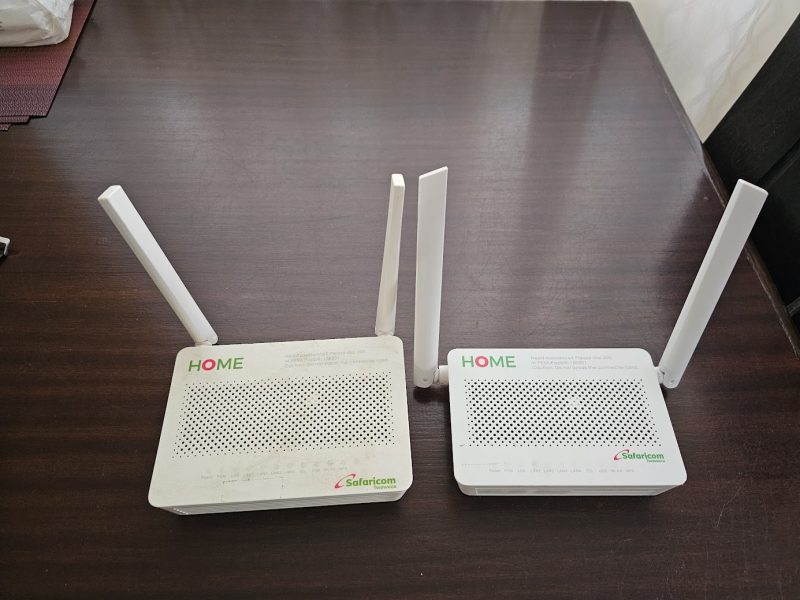
The service, FTTR, replaces the traditional setup in which a single Wi-Fi router distributes internet throughout a house. Instead, fibre lines and optical access points are installed throughout the home to maintain speeds in every room and reduce dead zones.
The launch comes as Safaricom shifts its broadband business upmarket. A few days ago, the company revised its fibre packages, with its entry-level 40 Mbps plan now starting at KES 3,000 a month, up from the previous 15 Mbps plan that targeted mass-market households.
The new product targets homes with multiple connected devices, ultra-high-definition streaming, gaming setups, remote workers and smart home systems. Safaricom said the service is built to support applications that require low latency and stable connections, including video conferencing and cloud-based services.
“Today’s homes demand more than just connectivity,” Chief Executive Officer Peter Ndegwa said.
Safaricom did not disclose the cost of FTTR installation or whether the service would require additional monthly charges beyond existing fibre plans. The company also did not say how many homes it expects to connect during the initial rollout.
The launch signals a broader shift in Kenya’s broadband market, where internet providers are trying to increase revenue per customer as demand for faster and more stable connections rises. Competition has also intensified with the expansion of providers including Starlink, Zuku, Jamii Telecommunications and Poa Internet.
FTTR has gained traction in parts of Asia and the Middle East, particularly in larger homes where Wi-Fi signals weaken across rooms or concrete walls. In Nairobi, where many apartment developments struggle with poor indoor connectivity, telecom operators increasingly see home internet quality as a competitive advantage rather than just a utility service.
Huawei is providing the optical networking equipment and Wi-Fi 6 infrastructure powering the service.