


Farm to Feed, a Kenyan agtech startup that enables smallholder farmers to manage food waste and incomes, has raised $1.5 million in seed funding to expand its operations across Kenya and into regional markets.
The round includes $1.27 million in equity led by Delta40 Venture Studio, with participation from DRK Foundation, Catalyst Fund, Holocene, Marula Square, 54Co, Levare Ventures, and Mercy Corps Ventures. The firm also received $230,000 in non-dilutive capital from DEG’s DeveloPPP Ventures programme.
Farm to Feed will use the funding to upgrade its digital platform and grow its semi-processed product range. It also plans to expand regional and export markets. The startup previously raised $1 million in pre-seed funding through a mix of equity and grants.
“This funding allows us to expand our reach, connecting more farmers to a market that is increasingly demanding sustainably produced food,” said CEO Claire van Enk. “As we scale, technology remains central to our growth.”
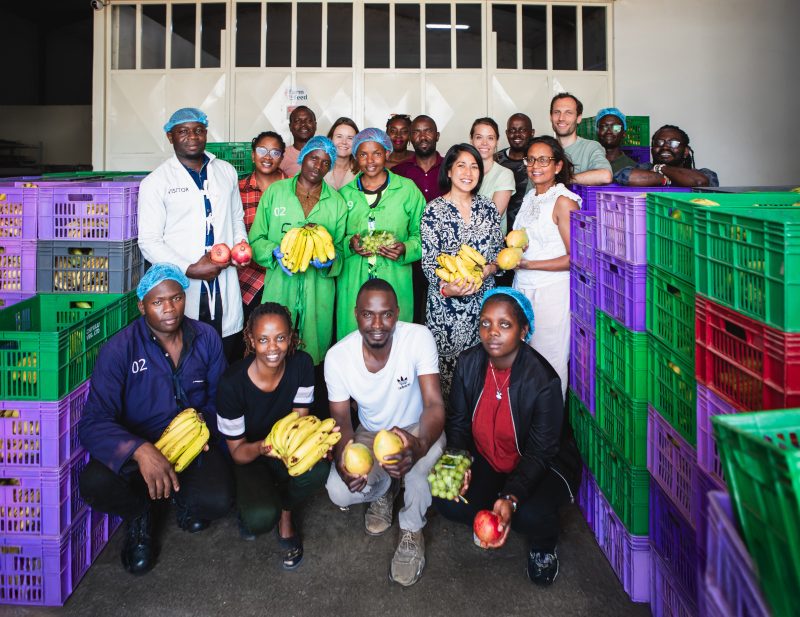
Founded in 2021 by van Enk, alongside co-founders Anouk Boertien and Zara Benosa, Farm to Feed operates a tech-enabled supply chain that purchases both perfect and imperfect produce directly from smallholder farmers. It then sells the produce to restaurants, caterers, and food processors, helping farmers earn more while reducing waste and emissions.
Farm to Feed claims its model has doubled its business annually, with 6,500 farmers onboarded to date, over 2.1 million kilograms of produce sold, and 247 tonnes of CO₂ equivalent avoided. The startup targets to make agricultural value chains more resilient to climate shocks by purchasing the full harvest and diverting surplus produce from landfills.
Delta40 Venture Studio Managing Partner Lyndsay Holley Handler said Farm to Feed’s approach creates value across the chain by ensuring every kilogram of produce generates income. Catalyst Fund and DRK Foundation, both repeat investors, cited the startup’s progress in linking climate adaptation with inclusive farmer growth.
Africa’s agriculture sector loses up to 40% of food produced before it reaches consumers, according to the UN. Farm to Feed’s model, backed by early traction and investor interest, aims to capture part of this lost value while cutting emissions from decomposing food and strengthening the livelihoods of smallholder farmers.