



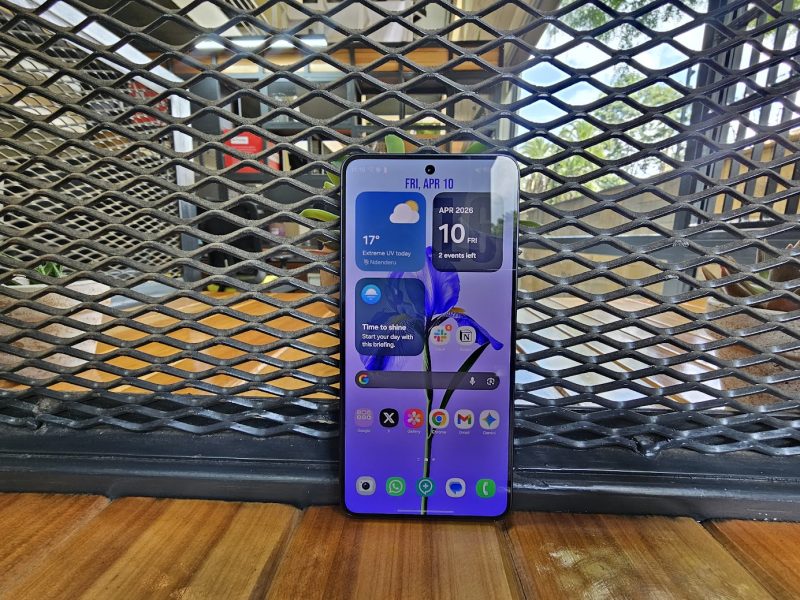
Intro
Samsung sells millions of Galaxy S phones every year, and the series still anchors its entire mobile strategy. That scale is important because it has always set expectations since the first Galaxy S launched 17 years ago.
Buyers assume each new model will move the needle in some visible way. The Galaxy S26 and S26 Plus do that, but not as much. They are measured updates to a mature product line, the kind that refine rather than move things drastically. In a market like Kenya, where a flagship purchase is a multi-year decision, that distinction may not worry some, as we have come to learn that the kind of customers that Samsung targets in this market do not care about cosmetic upgrades. It is something that Samsung knows in hindsight, and it is not a bad thing to be honest.
Price
The Galaxy S26 starts at KES 120,900 for 12GB RAM and 256GB storage, rising to KES 141,700 for 512GB. The S26 Plus pushes that to KES 144,400 and KES 170,300, respectively. The Ultra ranges from KES 171,400 to KES 197,300 (admittedly, you can find the same devices at lower prices elsewhere, but you risk buying a Dubai unit without a local warranty).
These are high-end prices in a market where even upper-midrange devices have crept up in price. Samsung has quietly removed the cheaper 128GB entry point, which partly explains the jump, but the net effect is still a higher entry price for what, at first glance, looks like a familiar phone.
The design is familiar
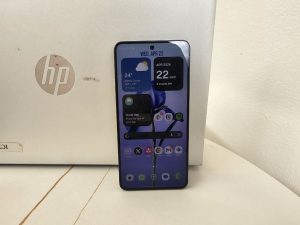
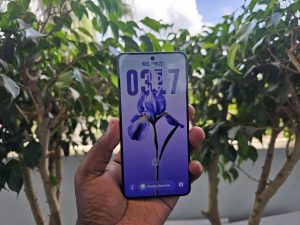
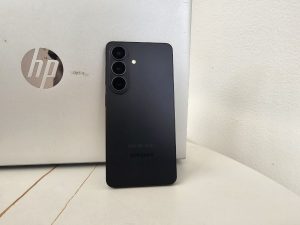
The S26 and S26 Plus look almost identical to last year’s models, with flat sides, a clean back, and three rear cameras in one corner. The only visible change is the move to a raised oval camera island, similar to Samsung’s foldables. It is a small shift, and not one that changes how the phone feels in daily use. If anything, last year’s simpler layout had a cleaner look. This year’s design is fine, but it does not try to stand out.
The S26 has also grown slightly, moving from a 6.2-inch display to a 6.3-inch display. On paper, that sounds minor. In hand, it is noticeable. The phone is taller, a bit wider, and a touch heavier, though still relatively compact by modern standards.
At 167 grams, it remains easy to handle, especially for users who prefer smaller devices. The S26 Plus, with its 6.7-inch display, sits firmly in the large-phone category. Both screens are sharp, bright, and consistent, continuing Samsung’s long lead in display quality.
Battery performance is impressive
I used the S26 during a trip to Kericho for a traditional wedding, which turned out to be a better test than a controlled event space. The day involved constant movement, heavy camera use, and uneven network coverage.
Battery life held up well. The S26’s 4,300 mAh battery, up from last year’s, lasted most of the day without stress. There was one evening when I reached for a power bank earlier than planned, but overall it performed like a dependable all-day device. The S26 Plus, which a friend carried, had a clearer margin thanks to its larger 4,900mAh battery.
Both devices I used were locked and could not accept SIM cards. In Kenya, that strips out a core part of the experience. You cannot test Safaricom or Airtel performance, mobile payments, or the phone’s real-world connectivity. It turns what should be a complete review into a partial one, and at this price level, that gap is frustrating.
Charging is another area where Samsung has drawn a line between the two models. The S26 sticks with 25W wired and 15W wireless charging, while the S26 Plus moves up to 45W wired and 20W wireless.
In practice, the Plus is quicker to top up, especially when you are in a rush. The difference is noticeable, though not as big.
What stands out more is what Samsung has chosen not to include. There is no built-in Qi2 magnetic charging. Other brands have started moving in that direction, making accessories easier to align and use. Samsung’s position is that keeping the phone thin matters more, and that users who want magnets can add them through a case. It is a defensible trade-off, though it feels like an area where the company is content to wait.
The Exynos 2600 is a beast
Performance, at least on the Exynos 2600 model sold in markets like Kenya, is solid. There is always a question around Exynos chips, especially when compared to Snapdragon variants used elsewhere.
In day-to-day use, those concerns feel less urgent. The S26 handled multitasking, social apps, and camera use without issue. I compared it directly with the S26 Plus my friend had, and there was no meaningful gap in responsiveness (I did not expect any, as they share the same chip). Apps opened quickly, scrolling was smooth, and the phone stayed stable under typical workloads. This is not a dramatic leap forward, but it is a steady improvement that most users will find sufficient.
Camera performance







The S26 and S26 Plus use the same 50-megapixel main sensor, 10-megapixel 3x telephoto, and 12-megapixel ultrawide setup that Samsung has relied on for several generations.
The company has become skilled at tuning these sensors, and under good lighting conditions, the results are reliable. Photos are sharp, colours are vivid, and images are ready to share without much editing. At the Kericho wedding, outdoor shots and group photos came out well, with consistent exposure and detail.
However, bright highlights can look slightly overprocessed, and low-light shots tend to brighten scenes in a way that introduces softness and visible halos around light sources. The telephoto lens delivers usable zoom, but images can feel flat, lacking the depth that newer systems from some rivals manage to capture. This is not a weak camera, but it no longer sets the pace, especially in today’s market, where the competition has moved faster.
Video performance
One area where Samsung has added something new is video stabilisation. The horizontal lock feature keeps footage level even when the phone is moving or rotating. It works well. Filming while walking through the event, or capturing dancing and movement, the footage stayed steady in a way that stands out.
There are moments where the processing becomes visible, with slight distortions as the system corrects motion, but the overall effect is strong. It is not something you will use for every clip, though for action it is useful.
OneUI 8.5 is clean and faster
Software is where Samsung is trying to add a sense of change, largely through AI features. Some of this comes from Google, including a more capable Circle to Search and a version of Gemini that is expected to handle more complex tasks like ordering services.
Samsung’s own additions include call screening, scam protection, AI-powered photo edits, and a more conversational Bixby. They work very well, like visual search that works reliably.
Others feel incomplete. Bixby, for instance, can handle simple requests but struggles with more complex tasks, often redirecting you to settings rather than completing the action. The tools are there, but they do not yet form a cohesive experience.
Samsung is offering seven years of software updates, which remains one of the strongest arguments in favour of the S26.
For buyers planning to keep a phone for several years, that level of support adds real value. Storage starting at 256GB also makes sense in a market where media files and apps quickly fill up space, even if it contributes to the higher starting price.
Should you upgrade?
If you are using a Galaxy S25, S24, or even S23, you may want to hold on to them. The improvements are incremental, and many of the software features will filter down to older devices over time. If you are coming from an older phone or switching from another brand, the S26 is easier to recommend. It is consistent, well-built, and does most things well.
The S26 and S26 Plus are not trying to surprise you because they want to be reliable, familiar, and easy to live with.
However, there is a question about price. In Kenya, where buyers tend to hold onto devices longer and weigh value carefully, that balance becomes harder to ignore. The S26 is a fantastic phone, but how many people are willing to spend KES 120K on it?