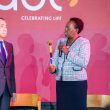




Airtel Africa and Elon Musk’s SpaceX have struck a deal to bring Starlink’s “Direct to Cell” technology to 14 markets, a move designed to eliminate the dead zones that have long hampered the continent’s digital economy.
The partnership, announced Wednesday in Dubai, allows Airtel’s 174 million subscribers to connect to satellites via standard 4G smartphones.
Unlike traditional satellite internet that requires a bulky dish, this service uses SpaceX’s growing constellation of low-earth orbit (LEO) satellites to act as a “cell tower in space,” bypassing the massive capital expenditure required to build physical masts in Africa’s most rugged and sparsely populated terrain.
For Airtel, the deal is a strategic hedge against the prohibitive costs of expanding rural infrastructure.
While terrestrial networks cover Africa’s urban hubs, vast swaths of the continent remain offline due to the logistical nightmare of laying fibre or powering remote towers.
Through the partnership, Airtel gains an immediate geographic advantage over rivals like MTN Group Ltd., potentially securing a dominant position in the “last-mile” connectivity race without the traditional debt burden of heavy hardware rollouts.
The service is slated for a 2026 launch, following a strict regulatory roadmap. The initial rollout will focus on:
-
Short-term (2026): Text messaging and basic data for select applications.
-
Long-term: Transitioning to high-speed broadband using Starlink’s next-generation satellites, which SpaceX claims will offer 20 times the data speeds of current mobile satellite offerings.
The success of the venture hinges on local regulators. While Starlink has been aggressively seeking licenses across Africa, it has faced pushback in markets like South Africa and Zimbabwe over ownership requirements and licensing fees.
Airtel’s established regulatory footprint in 14 countries could serve as the “Trojan Horse” SpaceX needs to smooth over these bureaucratic hurdles.
The agreement comes as the satellite-to-phone market heats up globally. Apple Inc. and Globalstar Inc. have already popularized emergency satellite messaging, while competitors like AST SpaceMobile Inc. are racing to provide full cellular broadband.
For Airtel Africa CEO Sunil Taldar, the SpaceX tie-up is less about competing with fiber and more about “contiguous connectivity”—ensuring a customer’s signal doesn’t drop the moment they leave a major city. “Starlink’s technology complements the terrestrial infrastructure,” Taldar said, noting it reaches areas where traditional deployment is simply not feasible.
While the financial terms were not disclosed, the partnership shifts Airtel’s narrative from a traditional telco to a hybrid tech provider.
However, the 2026 timeline means the impact on the bottom line won’t be immediate. Investors will be watching for how Airtel prices these satellite-enabled tiers in markets where average revenue per user (ARPU) remains significantly lower than in Western markets.