


Africa’s instant payment systems processed 71.4 billion transactions last year, and countries that built them now have GDP per capita about 17% higher than countries that didn’t. Yet more than half of the people already paying digitally still make around half their transactions in cash.
That gap is the main finding of the fifth State of Inclusive Instant Payment Systems (SIIPs) in Africa report, released on Thursday in Balaclava, Mauritius, by the AfricaNenda Foundation, the World Bank, and the UN Economic Commission for Africa. Five years into the build-out, the report finds that trust is destroyed less by fraud than by money that never comes back.
The continent now has 39 live systems serving 43 countries, up from 29 in 2022. Four went live in the past year: BurundiPay, Liberia’s Pay Na-Na, Guinea’s NimbaPay and PI-SPI. PI-SPI is a regional system covering the eight West African Economic and Monetary Union states.
Volumes have grown 28% a year since 2021. Value reached $1.8 trillion in 2025. This is an 8% fall in dollar terms, which the report attributes to currency moves. In local currency, value rose 7%. The average transaction has shrunk from $43 in 2022 to $26, and to $9 on mobile money systems, suggesting people are using them for everyday spending, not just occasional large transfers.
The study compared adopting and non-adopting countries across 54 economies from 2011 to 2025. It found no measurable effect on how many people own accounts, but active account use rose by about 7 percentage points. The 17% income gain is a one-off step up over the years after adoption, not faster growth, and the authors call the results “early and directional.”
Government spending as a share of GDP is 0.8 percentage points higher in adopting countries, consistent with cash activity becoming taxable. Zimbabwe’s tax on digital transfers is now one of its three biggest revenue sources, even as digital volumes keep rising.
The trust findings come from a survey of 1,403 users across 15 markets. Only a third pay digitally most of the time. Fraud, failed transfers, and duplicate charges are common, but they push people back to cash only when the money is lost for good. Users whose transactions are reversed sometimes transact more afterwards. A third of those who hit a problem never report it.
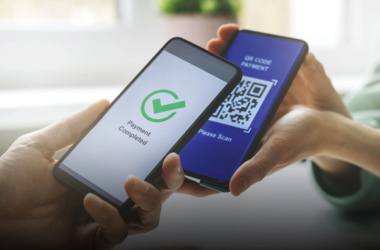
“I want a voice or a big green screen that tells me, ‘The money is in your pocket now,’” a rural shop owner in Morocco told researchers.
Few systems reach the top of AfricaNenda’s inclusivity scale. Only Nigeria’s NIP is rated mature; 11 systems are at the progressed level, 19 at basic and eight are unranked. Kenya, which pioneered mobile money, has two systems, Kenya Mobile Money and PesaLink, and both are at basic level. PesaLink moved up this year after adding new payment types.
The report urges operators to pool their AI fraud defences across the whole system so smaller providers aren’t left exposed. It also argues that regional systems could take in regulated stablecoins such as Nigeria’s cNGN rather than compete with them